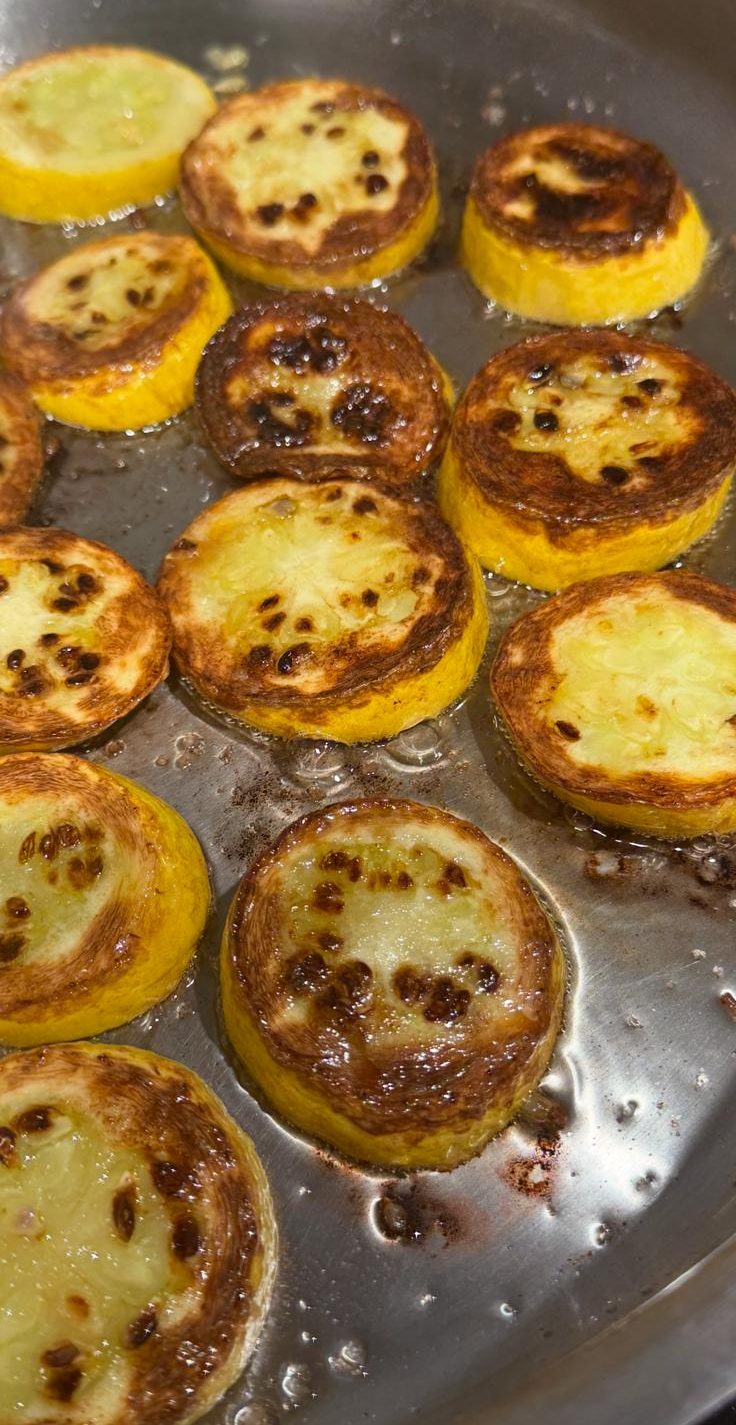
Clarified Butter (Milk)
The reason SEAR tastes like something.
We started with the flavor problem, because it was the hard one.
Butter burns for a reason: it's about 16% water, and it's full of milk solids. The water spits. The solids scorch and turn bitter. Cook those out and what's left is pure butterfat — the flavor, without the failure.
The obvious industrial answer is anhydrous milkfat. We tried it. It's stable, cheap, and it tastes like almost nothing — it's engineered to be neutral, which is exactly wrong for a product whose whole job is flavor. So we went to ghee, where the milk solids are cooked before they're removed, and the browning happens on purpose.
Then we had to find the right one, and most of them failed. Cultured ghee was tangy. One "brown butter" ghee tasted manufactured. Others were plain funky. And every one of them had to survive a problem most ghee never faces: dilution. At a fraction of the bottle, a ghee with a weak or strange flavor simply disappears into the oil, or turns the whole thing off. Most did.
The one we use is clean, buttery, and it carries. It comes from a food-safety-certified supplier, made from top-grade butter. We found it by cooking, not by reading spec sheets.
Expeller-Pressed
High-Oleic Sunflower Oil
The reason SEAR takes heat.
Butterfat gives you flavor. It doesn't give you a smoke point high enough to sear.
High-oleic means roughly 80% oleic acid — the same monounsaturated fat that dominates olive oil. That's what lets it sit in a screaming pan without breaking down. It is a fundamentally different fat from the high-linoleic oil most people picture when they hear "sunflower."
Expeller-pressed means it's squeezed out mechanically. Pressed. Most cooking oil on the shelf is chemically extracted with solvent. Ours never is.
That choice cost us money we didn't have to spend. We spent it anyway, because we wanted to be able to answer the question honestly, every time, without a caveat.
Rosemary Extract
The reason it lasts.
Fat goes rancid. That's not a scandal, it's chemistry — oxygen slowly degrades it and it starts to taste stale and flat. You've had it happen; you probably blamed the food.
Rosemary extract is a natural antioxidant that slows it down. It's a trace of the bottle. It's the only thing in here that isn't oil or butter, and we'd rather tell you why it's there than pretend a bottle of fat protects itself.
And Nothing Else
No water. No salt. No emulsifiers. No gums. No "natural flavors." No colorants.
We could have used a butter flavor system. They're cheap, stable, and they're in most of what you think is butter-flavored. We used butter.
Three ingredients. Read them out loud.