Live Fire

Cooking with SEAR, over real fire.

This page is a cooking log, not a recipe file.

Every entry is an actual cook from the MØRNA kitchen — what went on the fire, what got SEAR, and how it was seasoned. Real photos of real food, taken while it was happening. Nothing staged, nothing rendered.
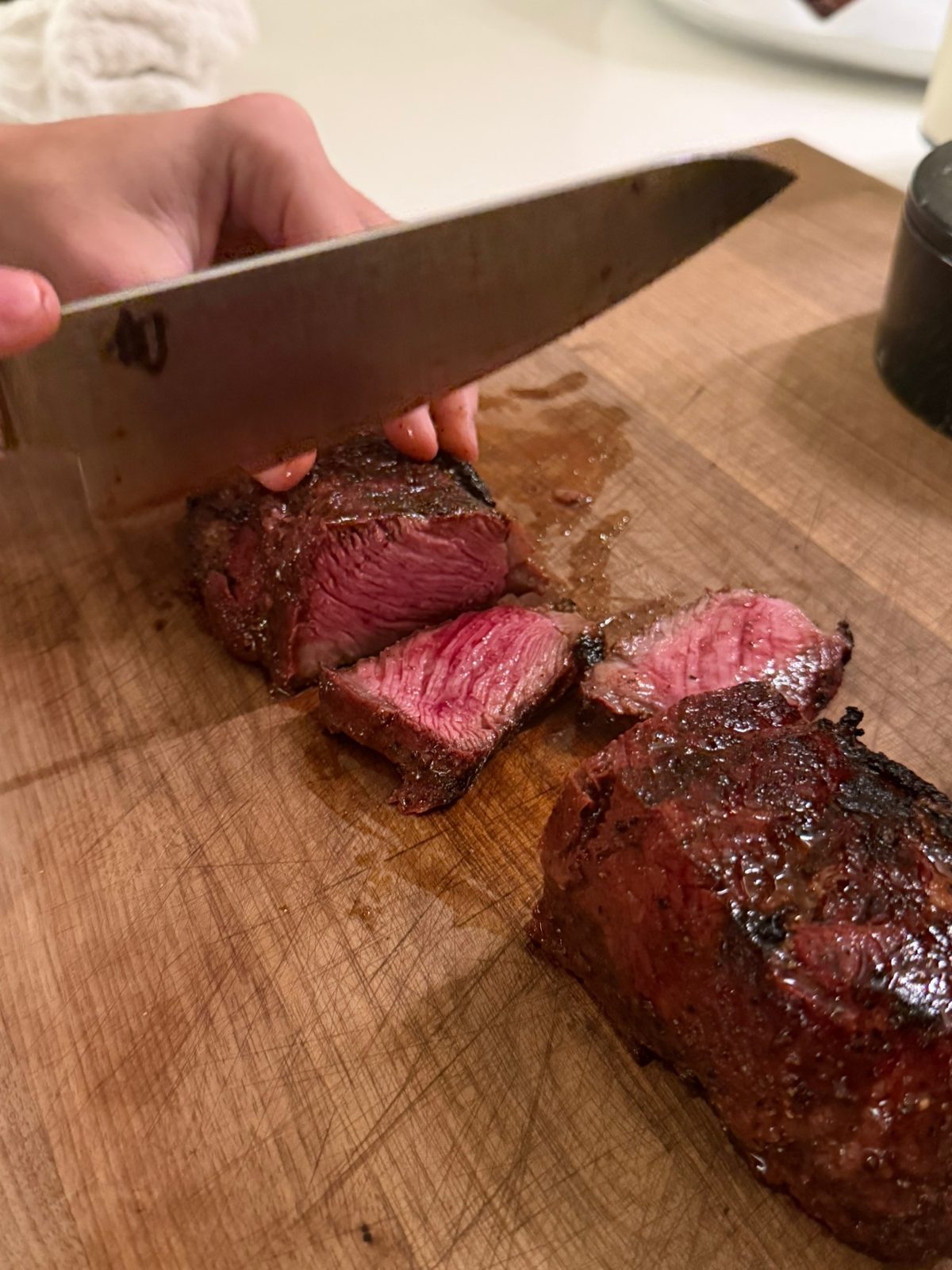
Slicing a steak on a wooden board: dark seared crust outside, rosy pink inside, slices fanning out under the knife.
The cut — crust outside, rosy all the way through. Entry 01, in full, below.

Fire is fire — read this first

This page is a log of cooking over open flame, and open flame deserves respect. A few things are always true here:

  • SEAR is a cooking fat, and fats are flammable. Keep the bottle away from open flame and hot coals, and never pour it directly onto a fire or a flare-up.
  • Everything on the grill can burn you — coals, grates, and the foil packets themselves. Sealed packets hold steam, too: open them facing away from your hands and face.
  • Never leave a live fire unattended. Keep children and pets back, and set the grill on a stable, non-flammable surface, clear of anything that can catch.
  • If fat or oil catches fire, smother it — lid on. Never water: water spreads a grease fire.

Cook within your own experience and your local fire rules. This page shows how we cook; it isn't an instruction to cook the same way, and MØRNA can't be responsible for injuries or damage from working with fire. When in doubt, use a pan — SEAR was built for that too.

Entry 01 · November 1, 2026 · Houston, Texas

Argentinian Foil-Packet Vegetables

The Argentinian way with vegetables is tin foil: every vegetable gets its own packet — seasoned, sealed, and set over the coals to steam and roast in its own juices. The only change here is the seasoning. Instead of the traditional mix, everything gets SEAR and lemon pepper.
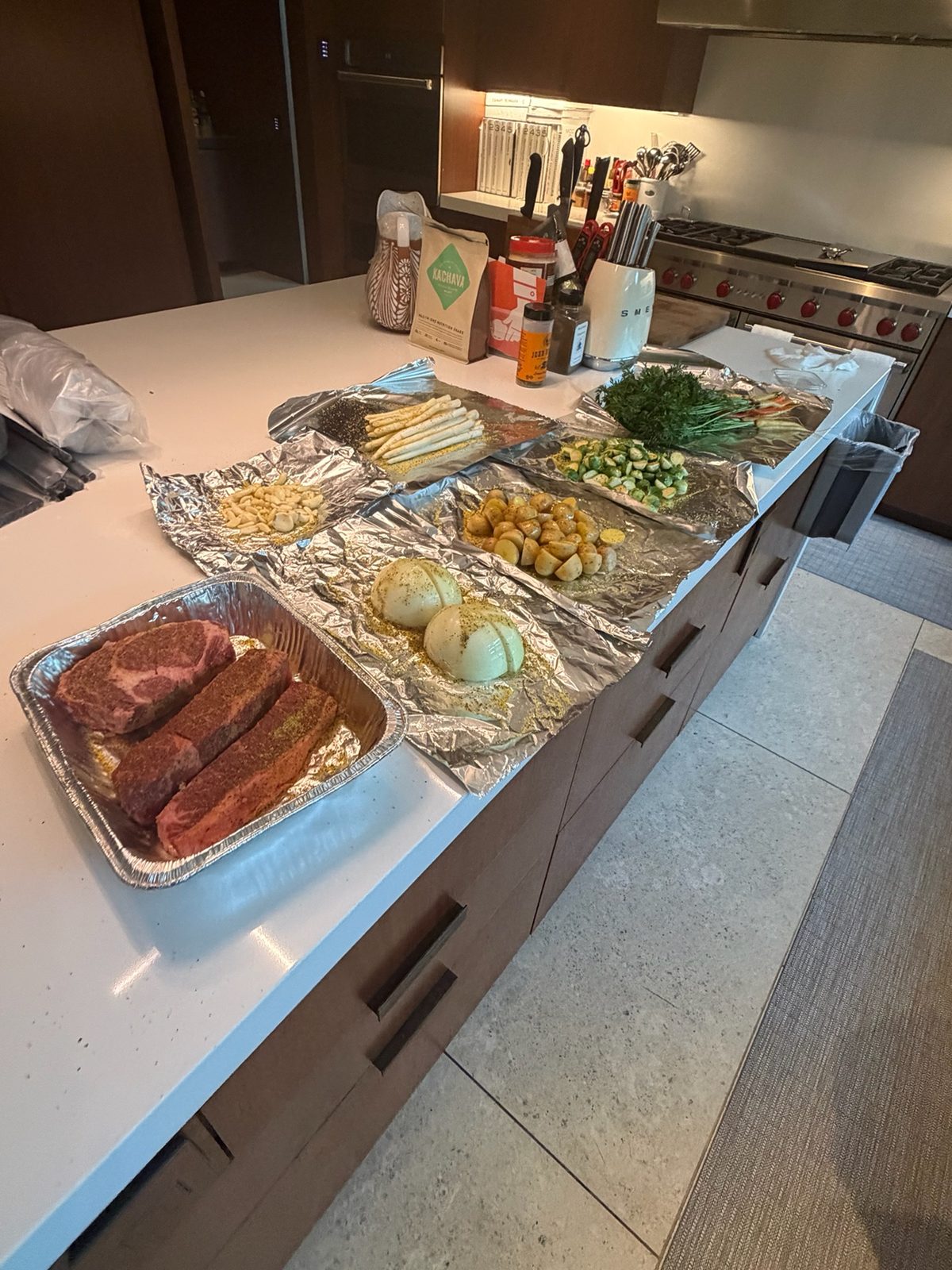
The whole cook laid out on the kitchen island: seasoned steaks in a foil tray and garlic, white asparagus, onions, baby potatoes, Brussels sprouts and rainbow carrots, each on its own sheet of foil.
Everything gets its own foil. Steaks in the tray; every vegetable on its own sheet, ready to season.

The lineup: garlic, white asparagus, onions, baby potatoes, Brussels sprouts, and rainbow carrots. Each one is cut so the seasoning gets everywhere — potatoes and sprouts halved, onions cross-cut so the SEAR works down into the layers.
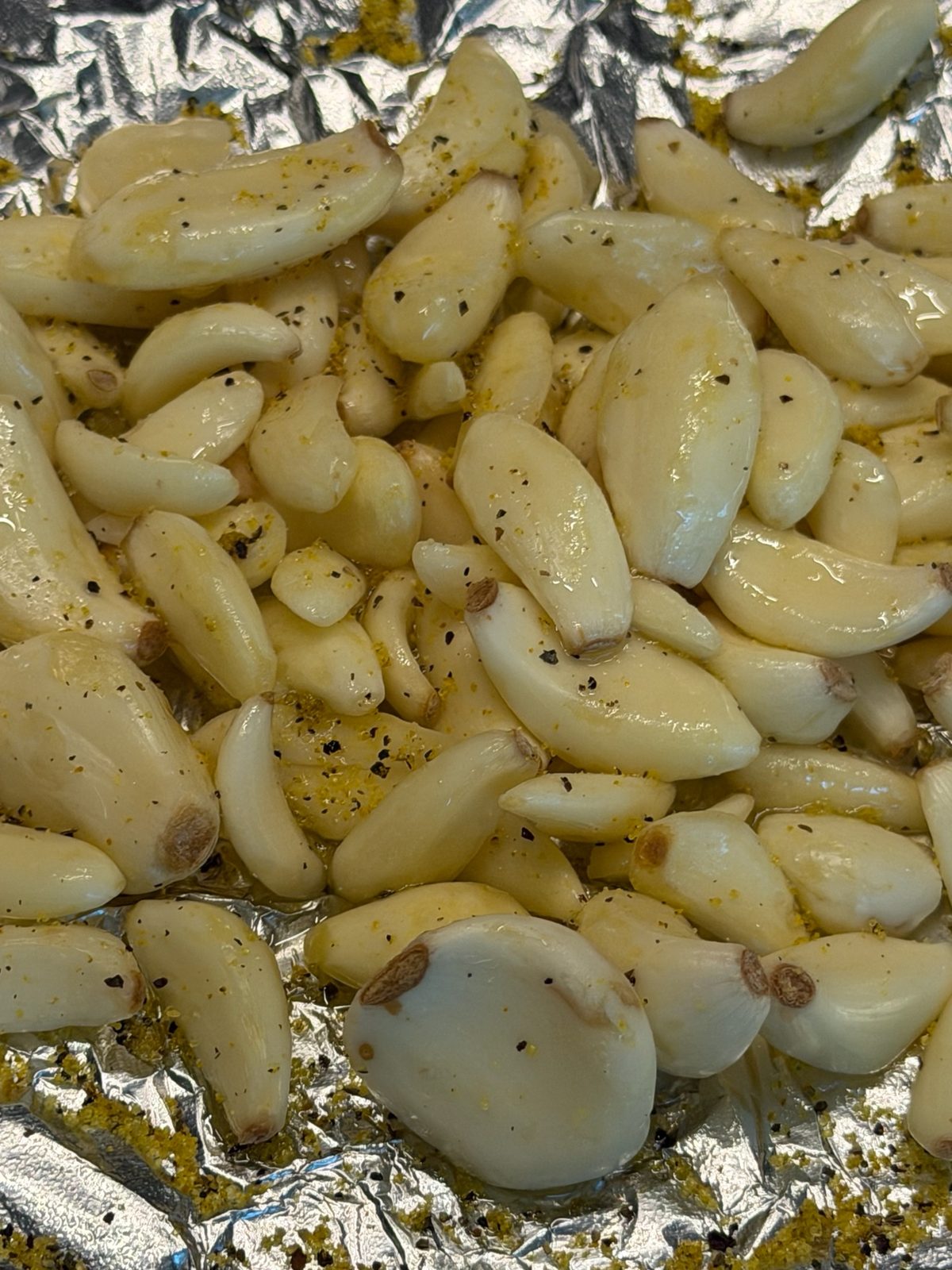
Peeled garlic cloves on foil, glossy with SEAR and flecked with lemon pepper.
Garlic, in SEAR and lemon pepper. It comes out soft and sweet.
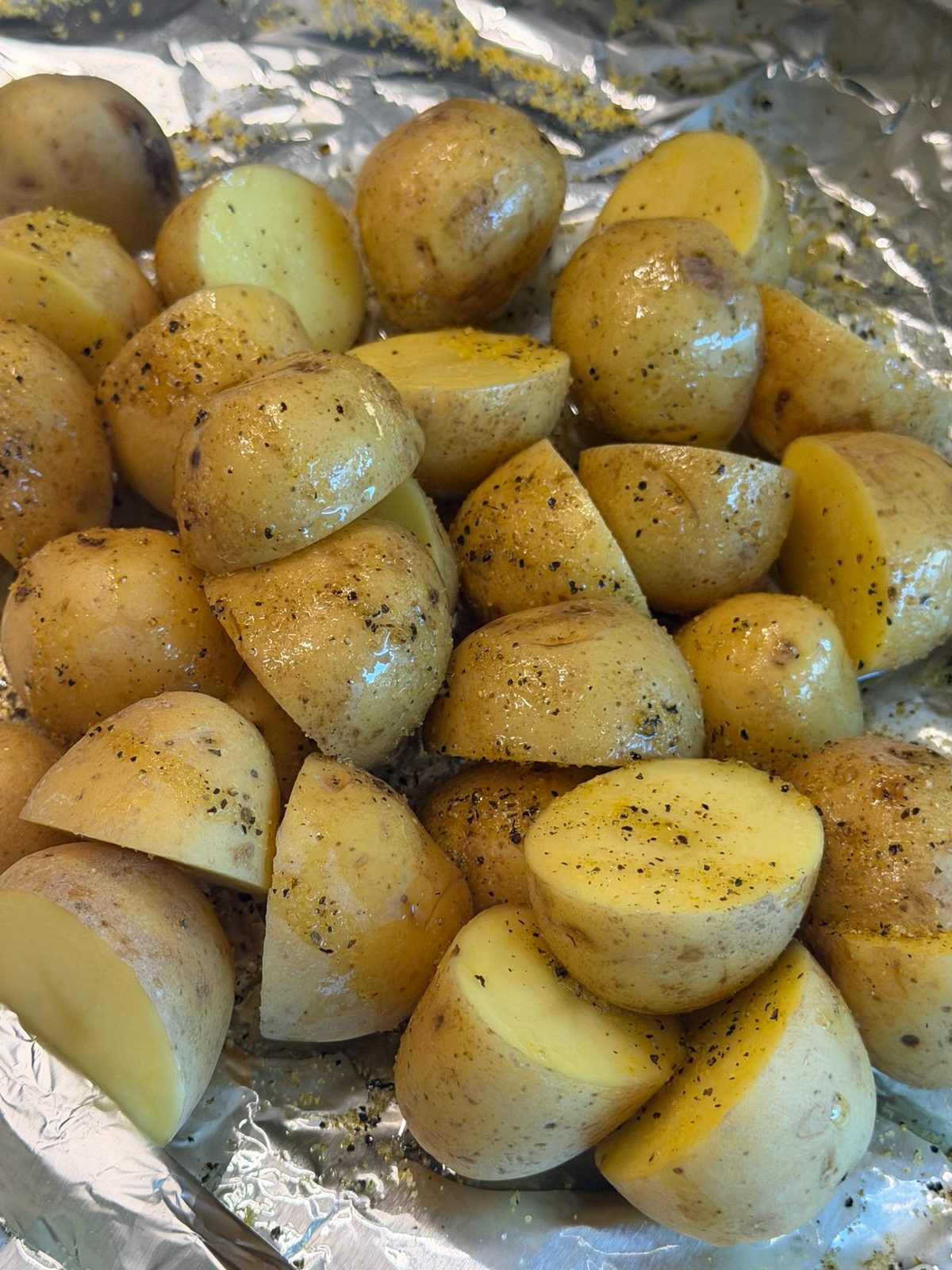
Halved baby potatoes on foil, coated in SEAR with lemon pepper.
Baby potatoes, halved so the lemon pepper gets everywhere.
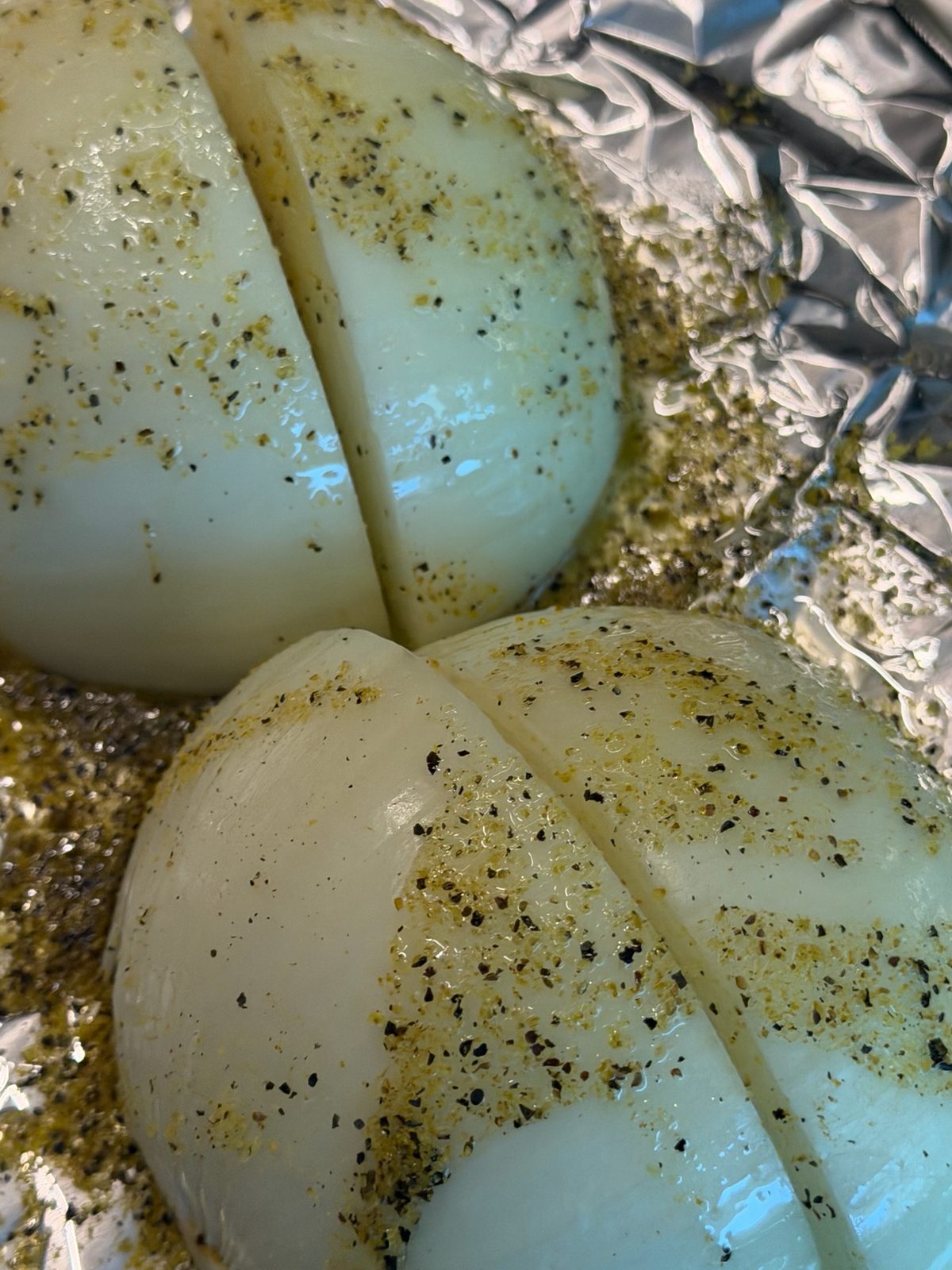
Two onions, halved and cross-cut, seasoned with SEAR and lemon pepper on foil.
Onions, cut so the SEAR works down into the layers.
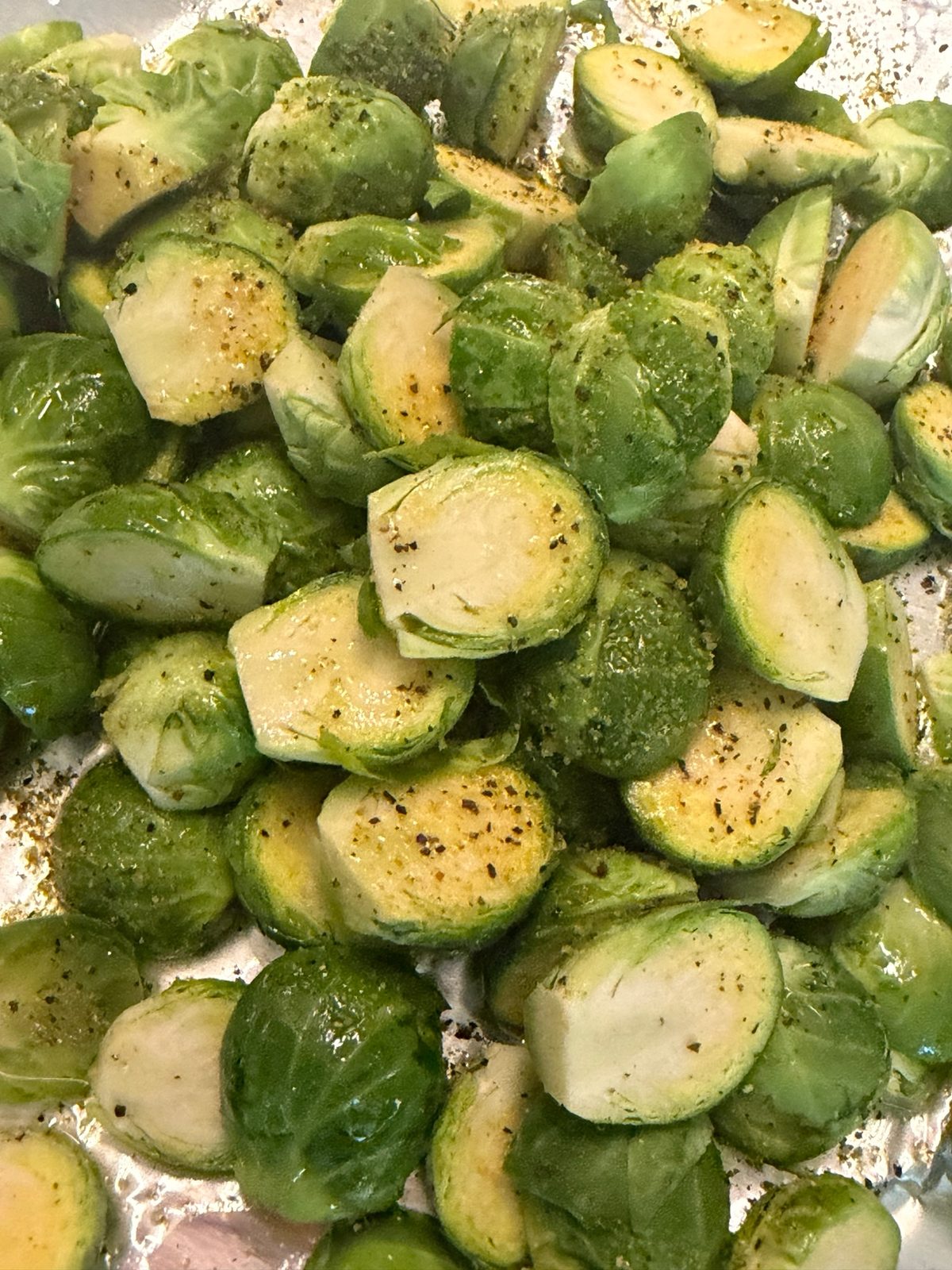
Halved Brussels sprouts on foil, glossy with SEAR and lemon pepper.
Brussels sprouts. The cut side is where the flavor lands.

The carrots are the one exception: SEAR only, no lemon pepper.
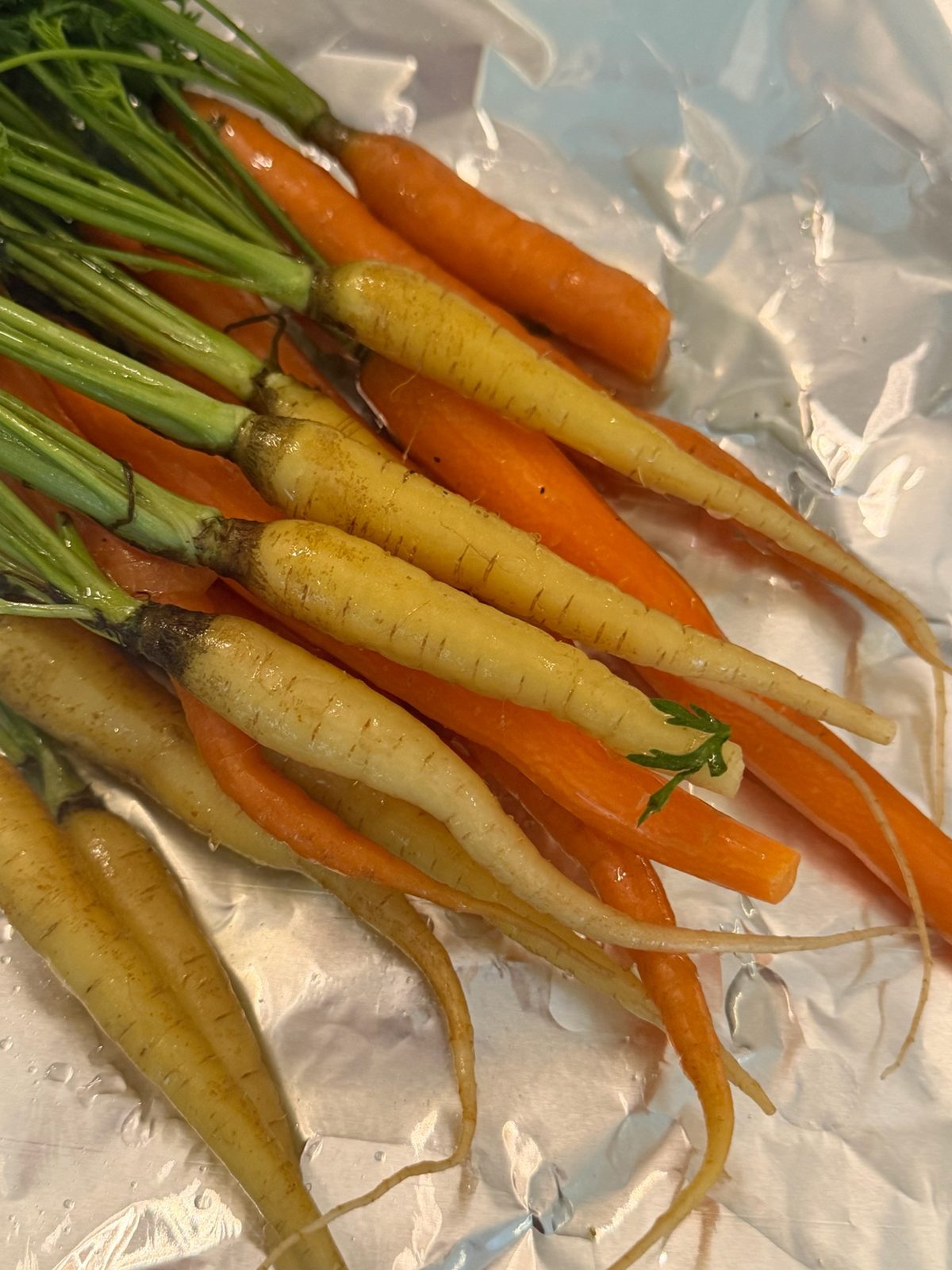
Rainbow carrots with their tops on, on foil, coated in SEAR only.
Rainbow carrots, tops on. SEAR only — the exception that proves the seasoning.

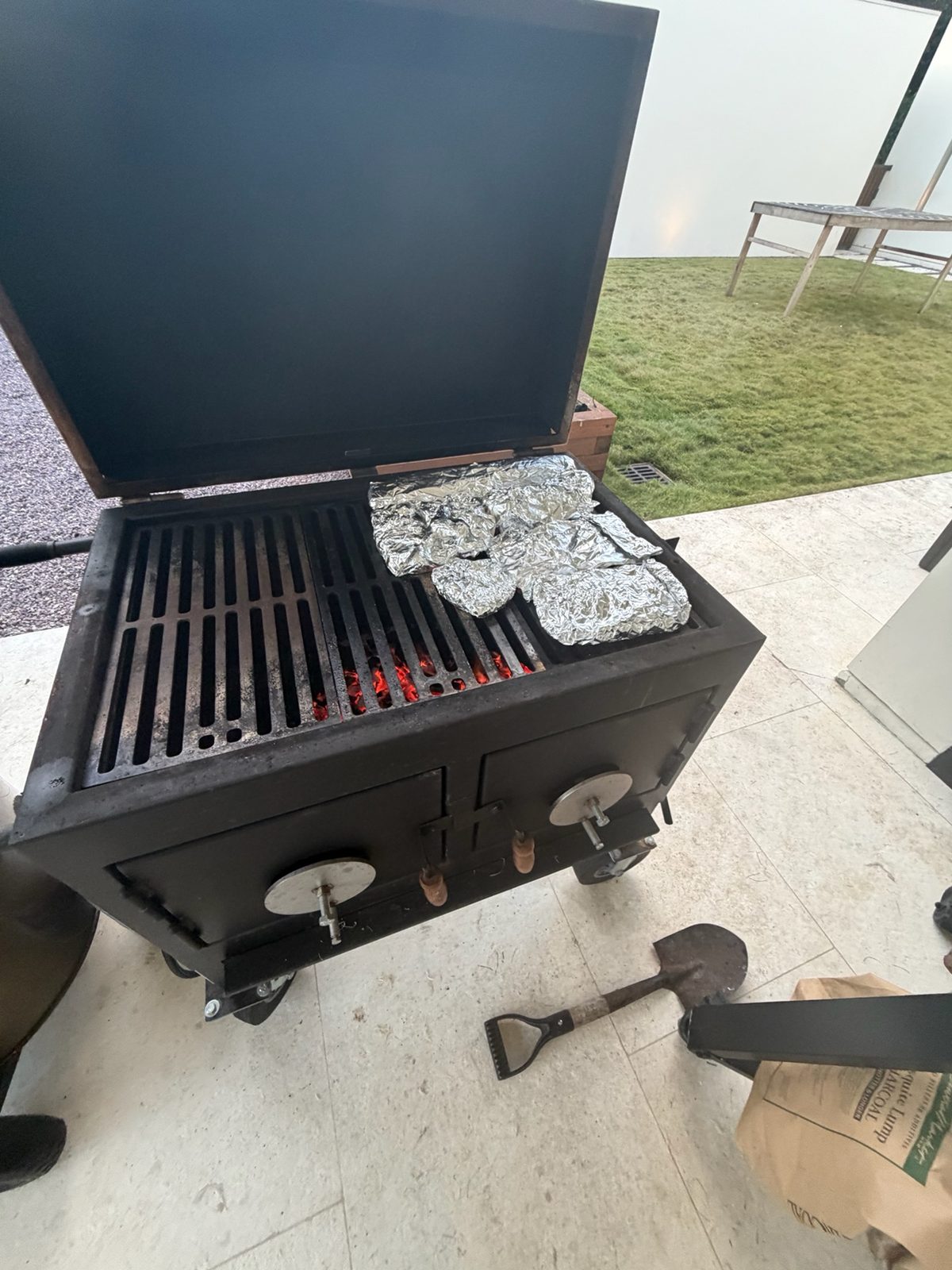
Then the packets are sealed and go straight onto the parrilla, over lump charcoal.
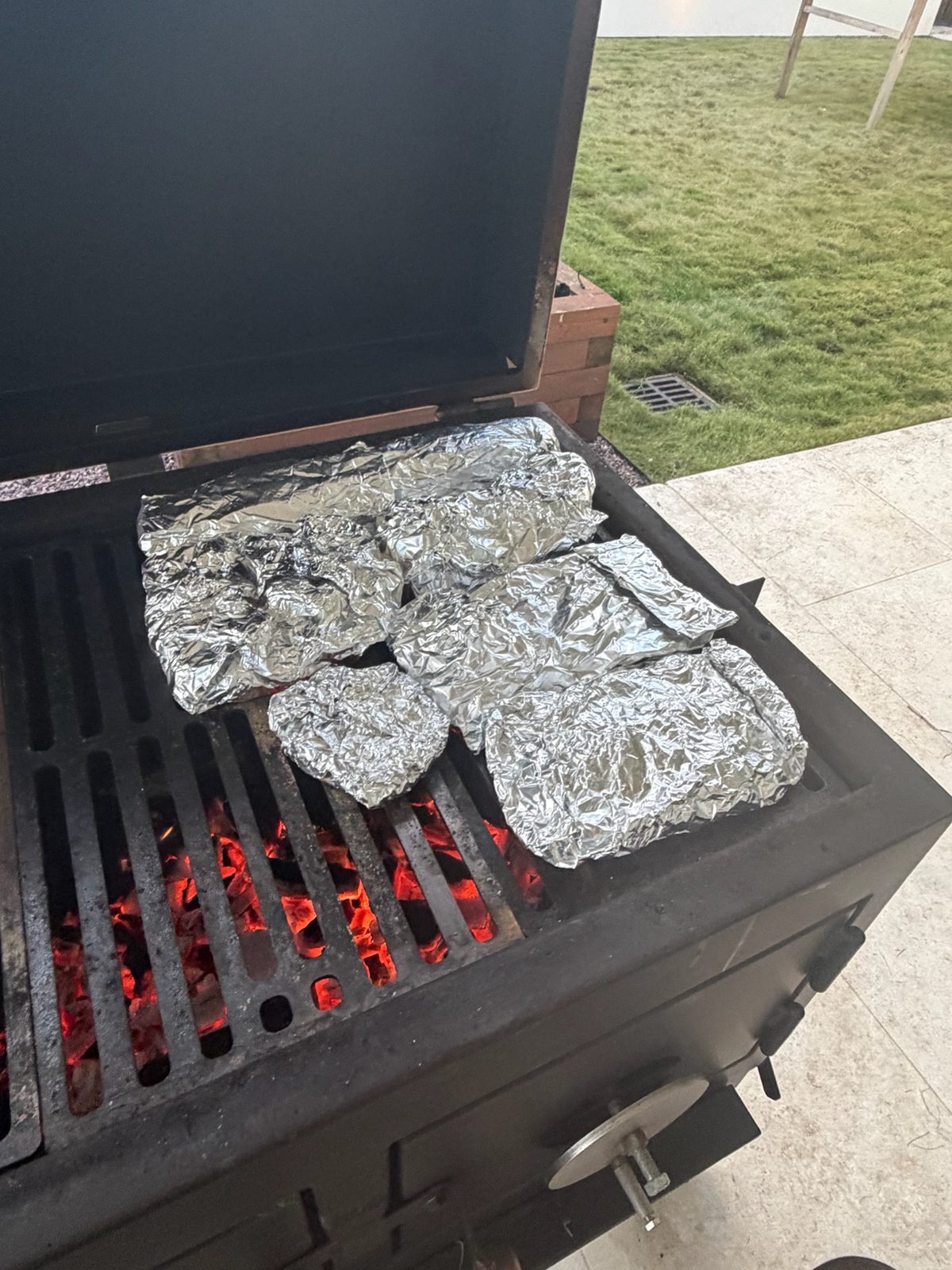
Sealed foil packets on the grill grate over glowing red charcoal.
Packets on, over the coals.
Foil packets cooking on the parrilla over lump charcoal embers.
Everything cooks in its own packet, in its own SEAR.

The steaks — a bone-in ribeye and Denver cuts — got the same treatment as the vegetables: SEAR and lemon pepper. They went onto the same grate, straight over the coals, beside the packets.
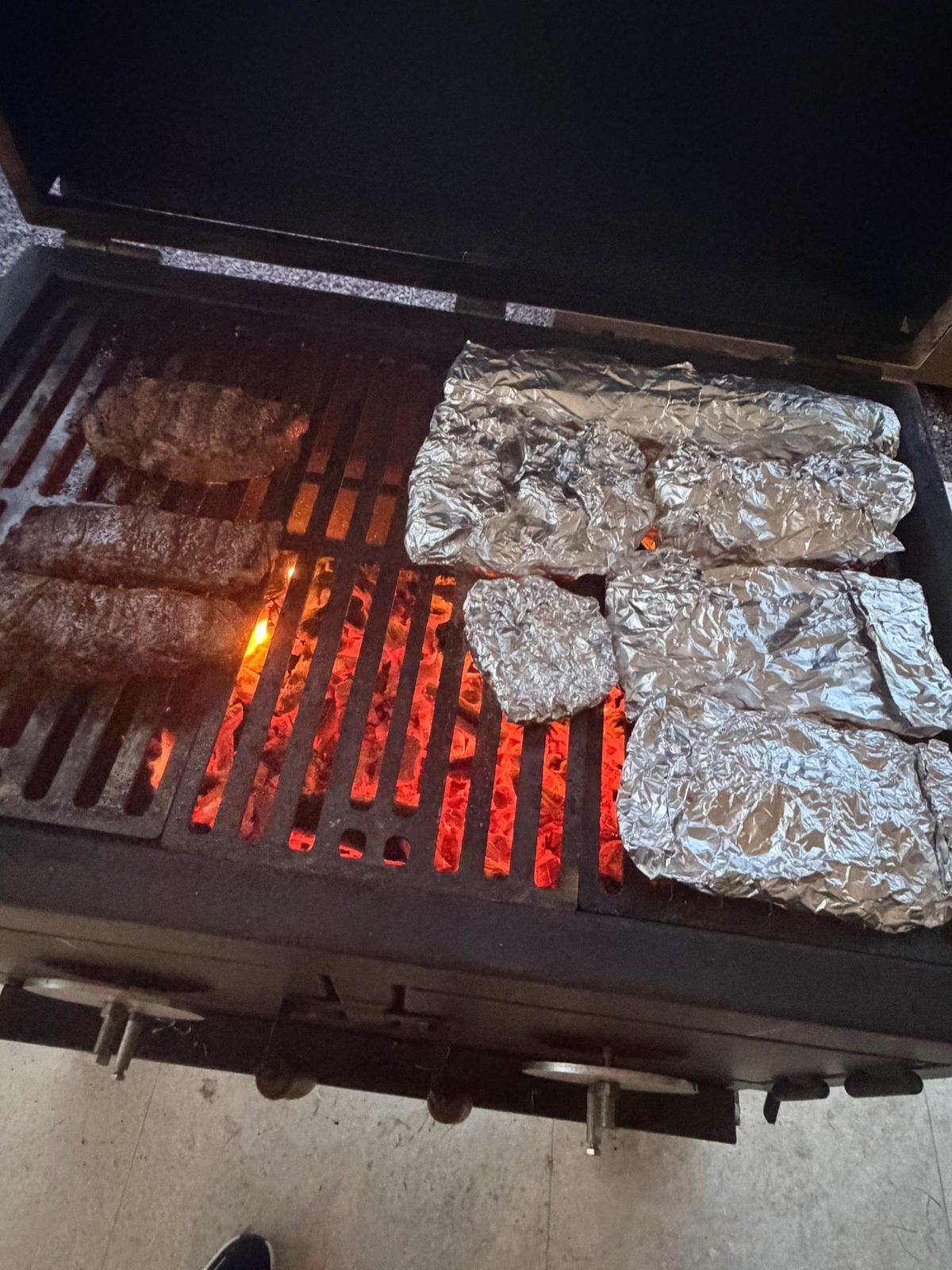
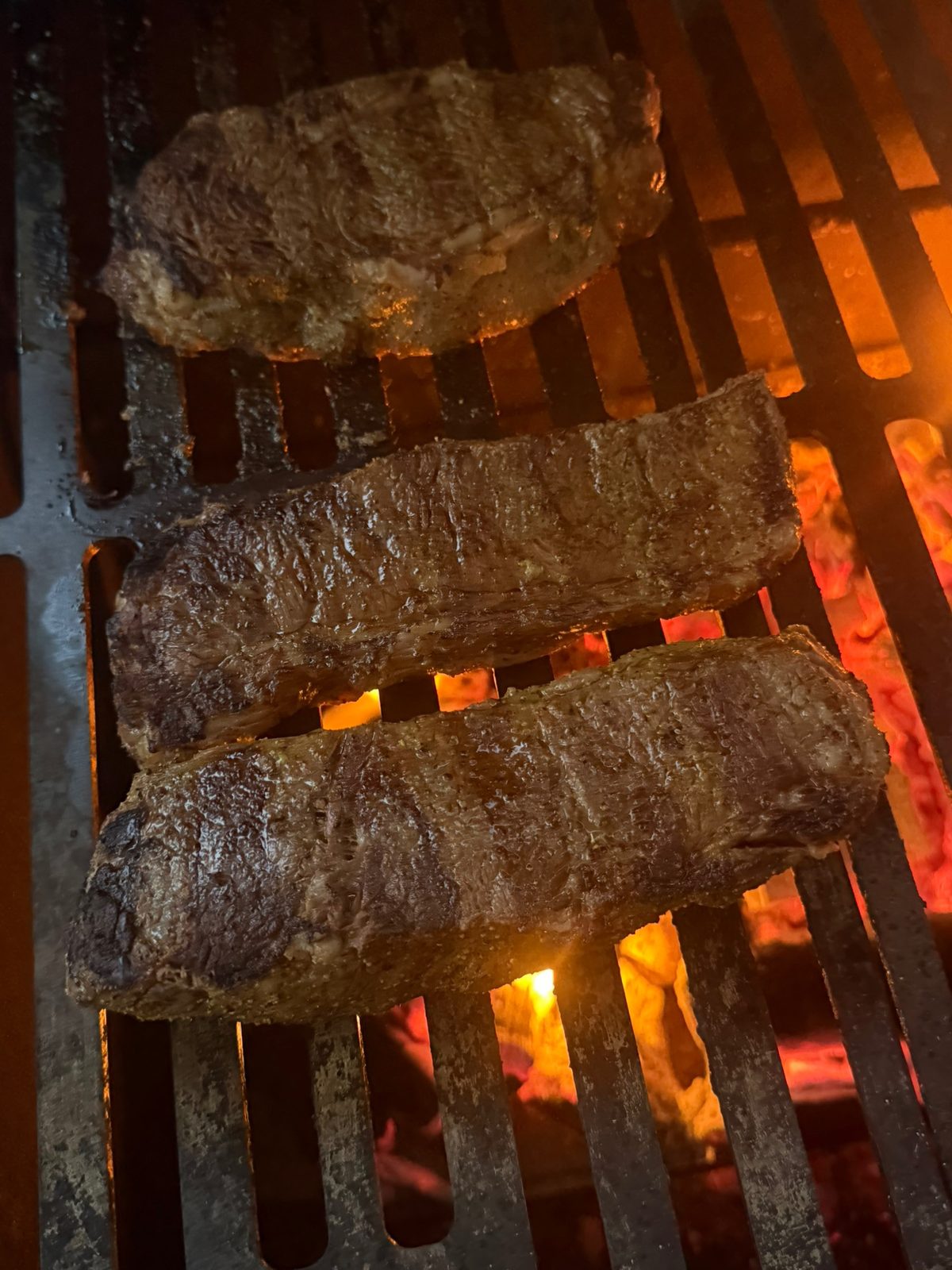
Three steaks searing on the parrilla grate over glowing coals, foil packets beside them.
Steaks on the grate, packets alongside — everything on one fire.
Close-up of three steaks with deep brown crusts searing over orange coals.
Bone-in ribeye and Denver cuts over lump charcoal — SEAR and lemon pepper, same as the vegetables.
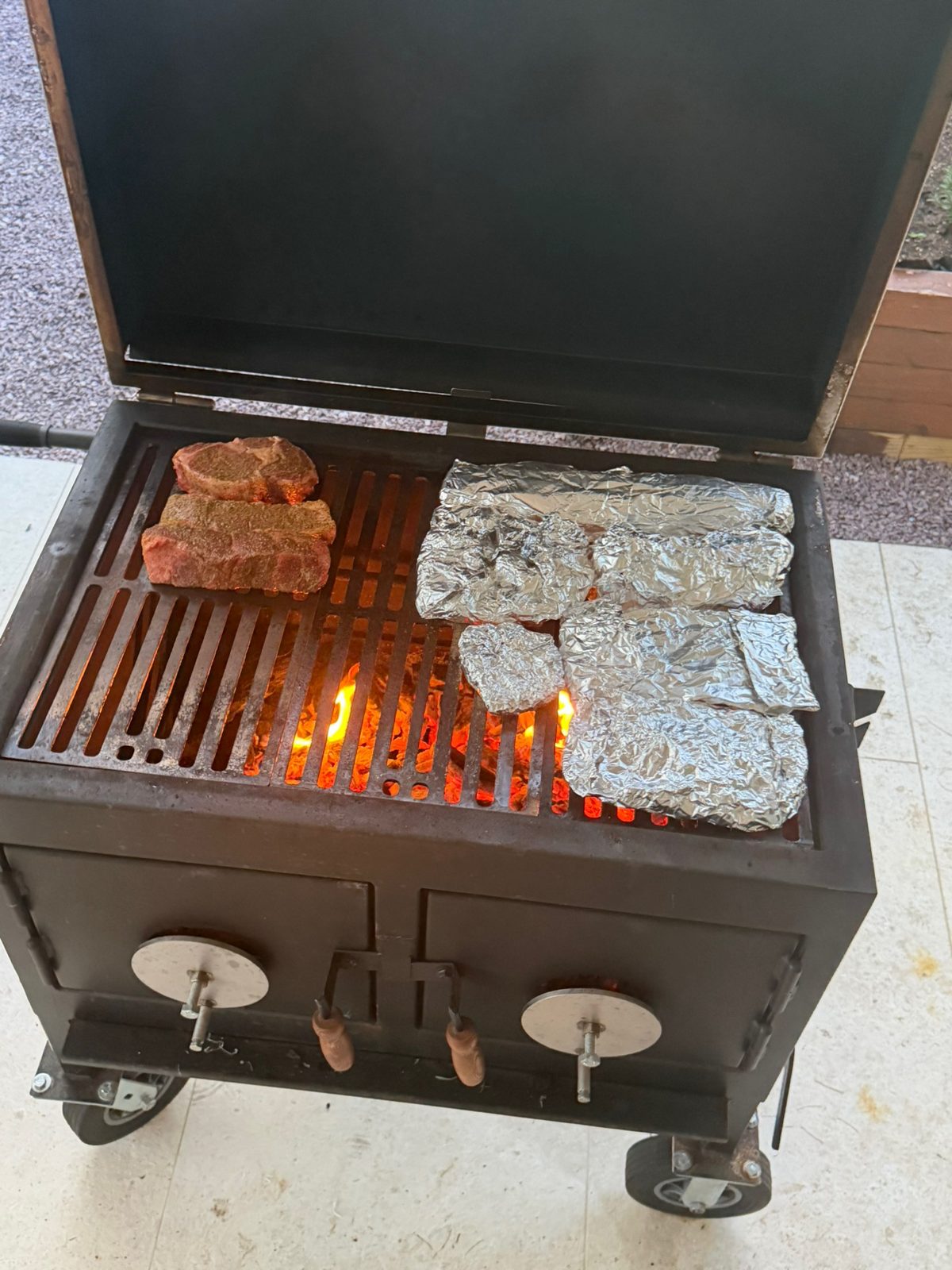
Top-down view of the open parrilla: three seasoned steaks on the left of the grate, six foil packets on the right, glowing lump charcoal below, and empty grate to spare.
Three steaks, six packets — with room to spare.
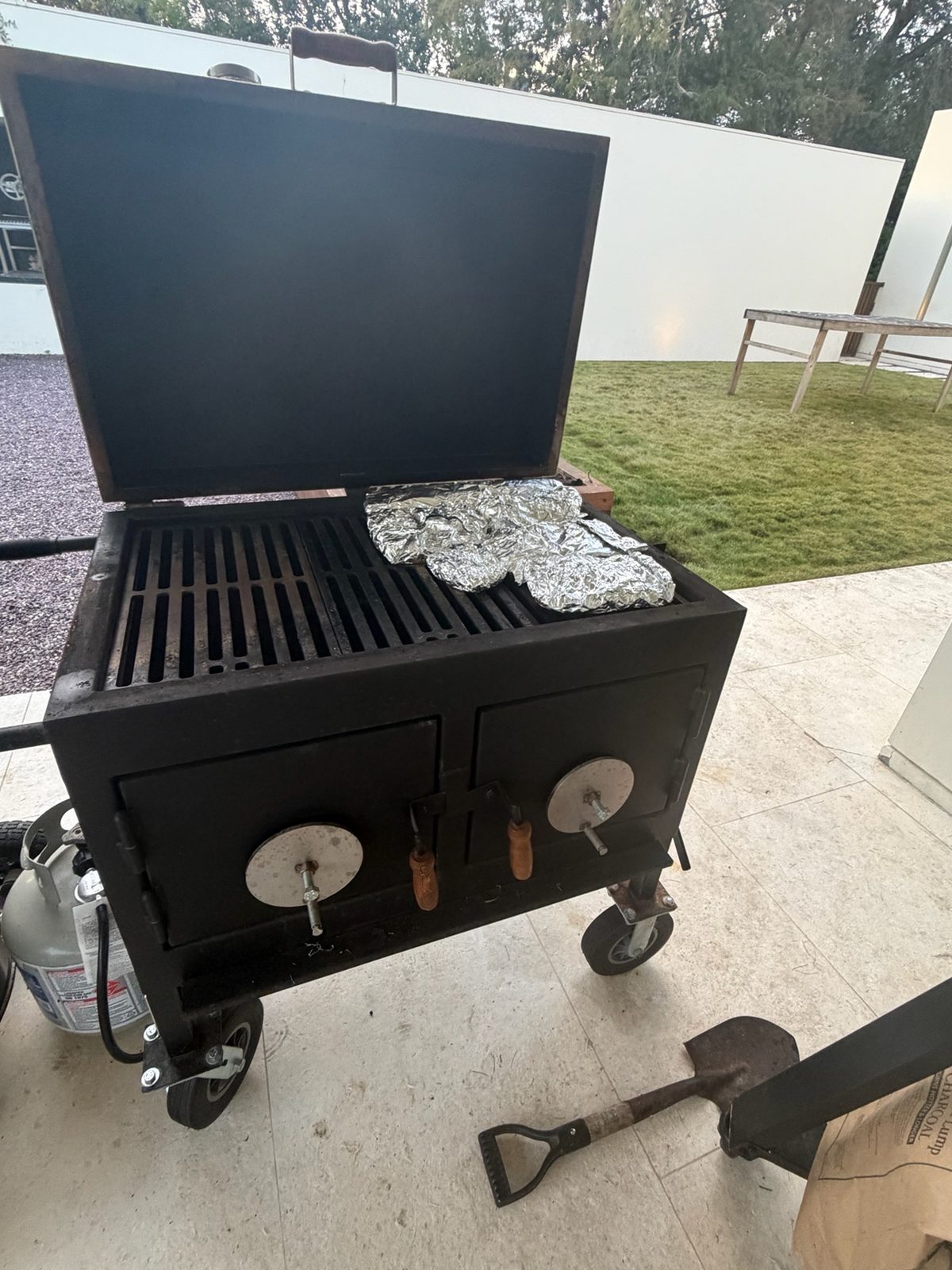
The black Argentine-style parrilla grill in the backyard, foil packets on the grate, lump charcoal bag beside it.
The parrilla. Lump charcoal, no shortcuts.

Off the fire and onto the plate — the packets opened, the steaks rested:
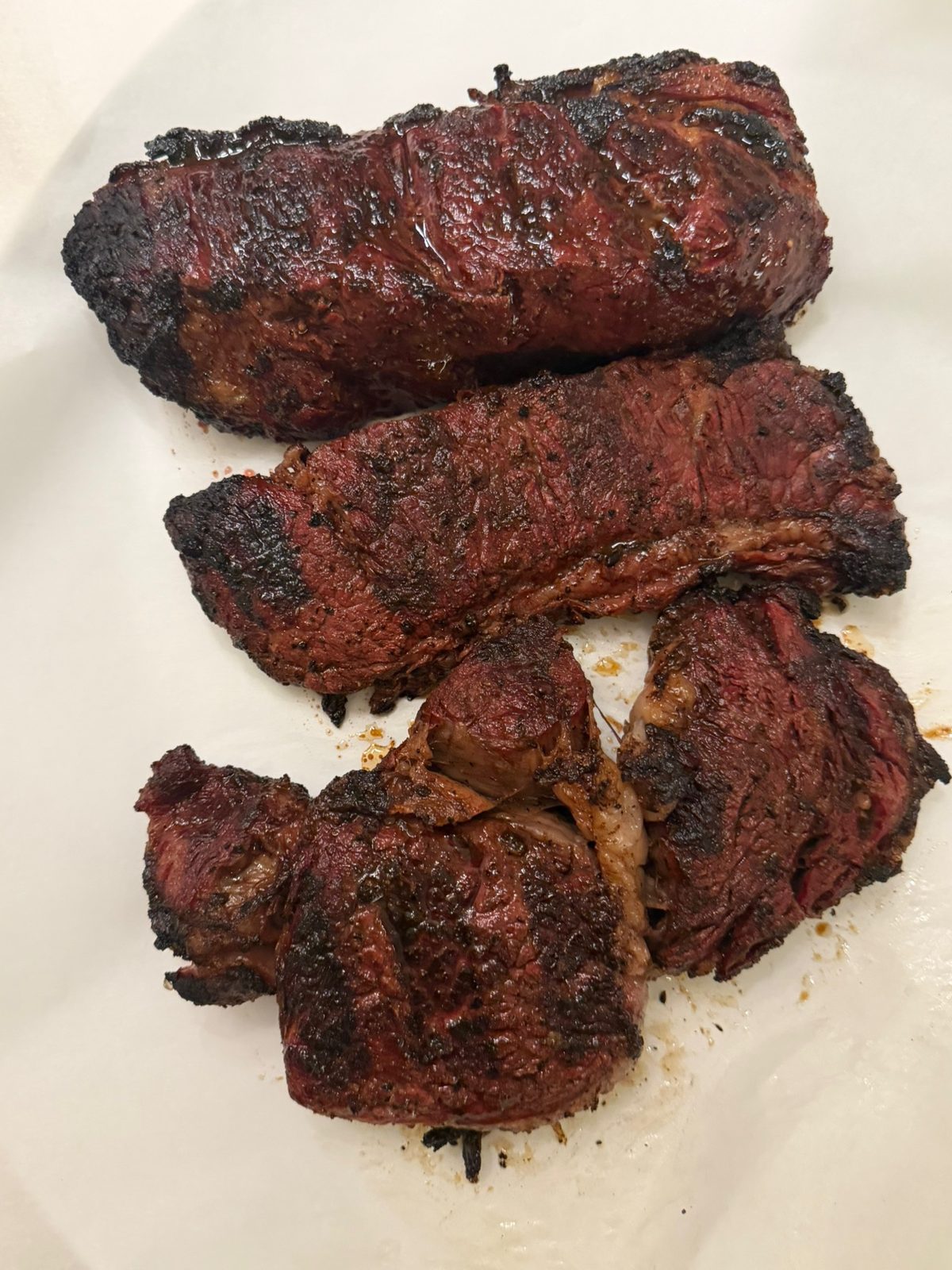
The finished steaks resting on a plate: Denver cuts and the bone-in ribeye with deep red-brown crusts and charred edges.
Rested. Deep crust, charred edges — the fire did its part.
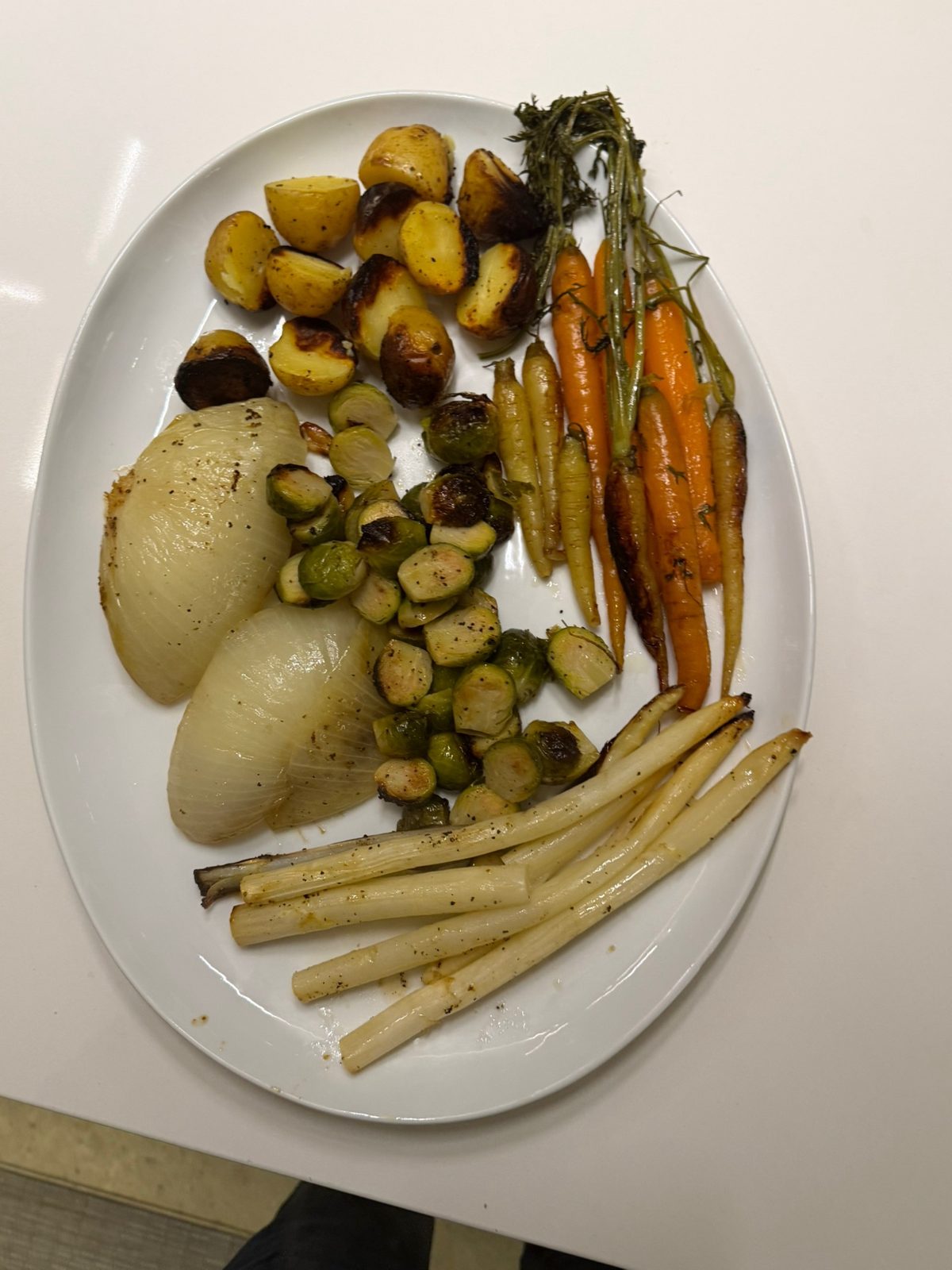
The finished vegetables on a platter: golden baby potatoes, rainbow carrots with their tops, charred Brussels sprouts, soft layered onions, and white asparagus.
Everything out of the packets: potatoes, carrots, Brussels sprouts, onions, asparagus.
Slicing a steak on a wooden board: dark seared crust outside, rosy pink inside, slices fanning out under the knife.
The cut: crust outside, rosy all the way through.
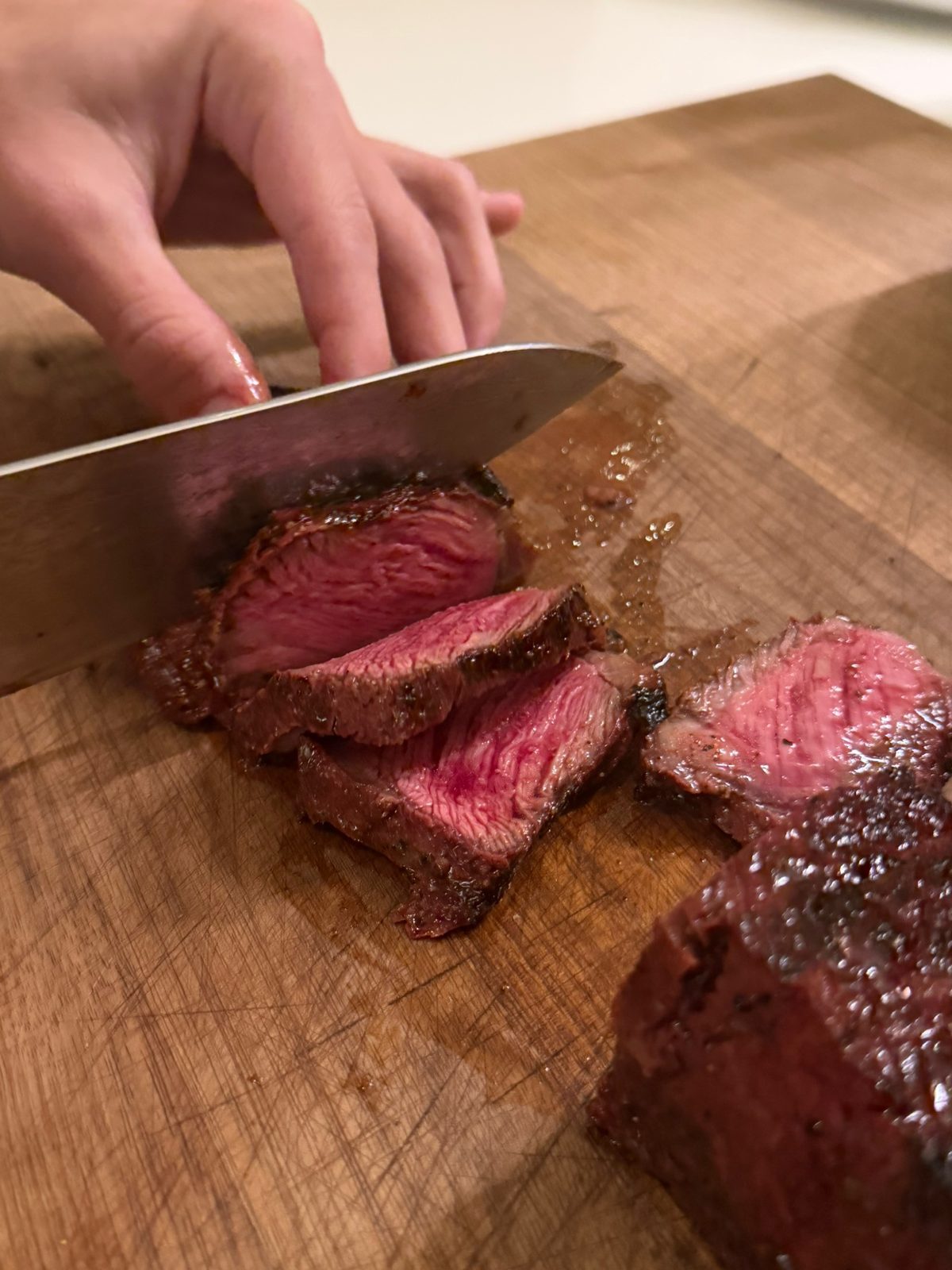
A second steak being sliced on the board, showing the same dark crust and rosy interior.
Same story on the second cut.

Entry 01, start to finish: six packets, three steaks, one fire.
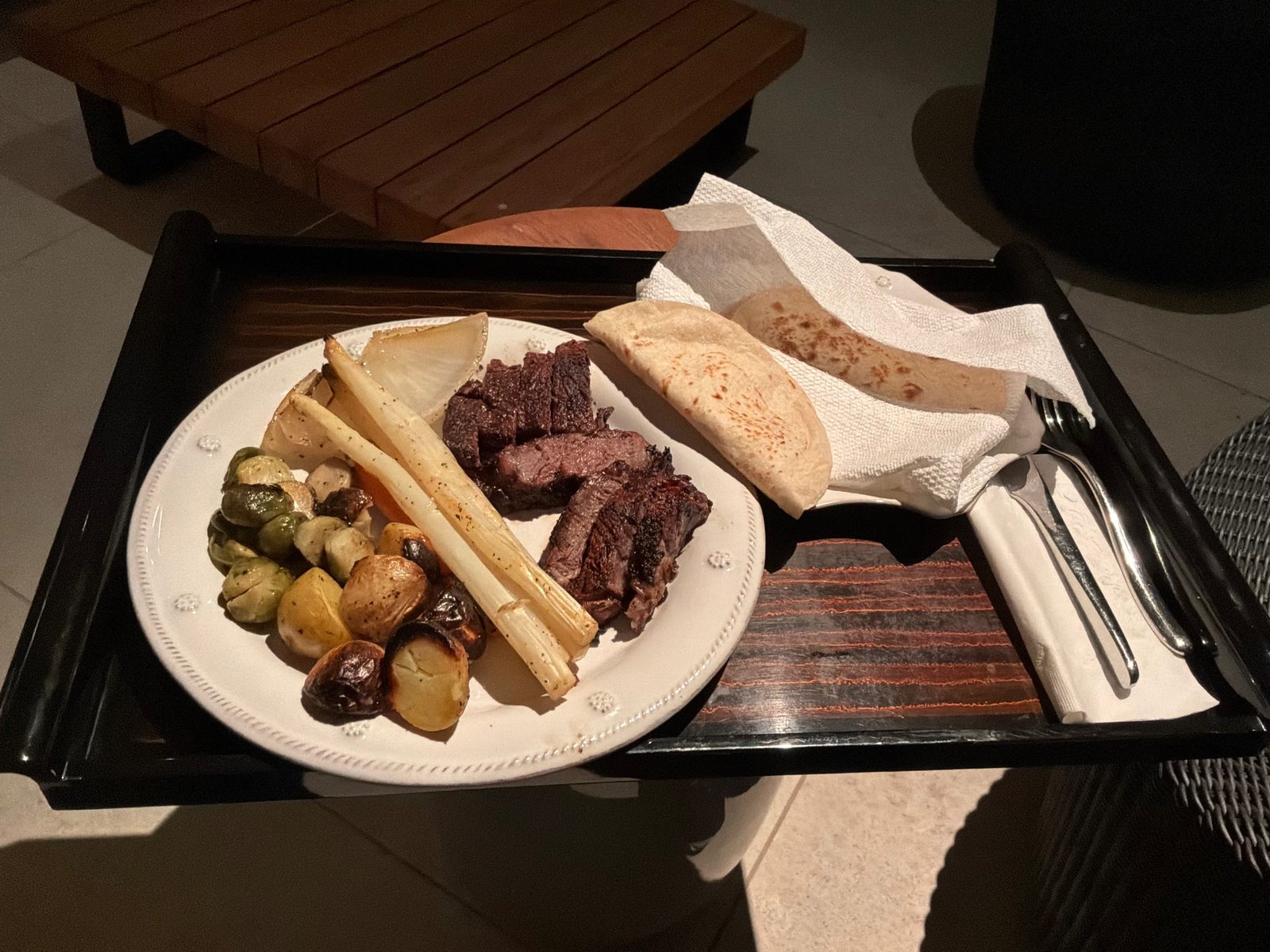
The served plate outdoors on a tray: sliced steak, white asparagus, Brussels sprouts, baby potatoes and onion, with warm flour tortillas in a napkin beside the plate.
Dinner, outside: steak, the packet vegetables, warm flour tortillas.
Slicing a steak on a wooden board: dark seared crust outside, rosy pink inside, slices fanning out under the knife.
The cut, one more time — crust outside, rosy all the way through.

More fire coming

New entries land here as the cooks happen — no schedule, no staging. If you're cooking over fire yourself, start with a bottle and season like you mean it.